Making your systems talk, from HL7 v2 to the spreadsheet
Every siteconnects its own way

Site one speaks HL7 v2. Site two has a FHIR endpoint that only answers from inside the trust network, site three emails a spreadsheet, and the integration you already built for the first two knows nothing about any of it. Every connection is a translation job of its own. The shape repeats. The particulars never do. One model underneath, one adapter per site.
Book a 15-minute callSend the details below. I'll reply by email to arrange a time.
London, UK · Available for new projects
What actually slows medtech and clinical research teams
The record keeps the value and loses the history
A record that updates in place keeps the current value and loses the one before it. Good Clinical Practice wants the old value, who changed it, when, and why. Adding that after the study opens means going back through backups to work out what the field used to say.
Consent is easy to take and hard to withdraw
The form captures it once and stores a yes. A withdrawal has to reach the analysis extract, the copy the statistician pulled for the interim look, and the partner who already has a dashboard. Capturing consent is a field in a database, and acting on its removal is a job that touches everything downstream.
Every site connects in a different way
One trust offers an HL7 v2 feed, another a FHIR endpoint that only answers from inside the network, and a third sends a spreadsheet somebody types into REDCap by hand. Each new site restarts the DSPT and DTAC conversation from the top, with a different information governance lead.
Pseudonymised still points back at a person
Strip the DICOM header and the patient's name can still be burnt into the pixels. The free-text box a clinician typed into carries more than every tick box on the form. The key linking a study ID to a patient has to live somewhere, and where it lives is the question.
making your systems talk
The sync runs one way where one way is enough, and two ways only where it has to, with an agreed rule for what happens when the two disagree. Which system owns which field is settled in writing before any of it starts. Every run leaves a record. A row that cannot be matched stops and says so, and the disagreement goes into a reconciliation report somebody reads.
- Who owns each field, in writing
- One line for every field that lives in more than one system, and the name of the one system allowed to change it. Most arguments about bad data end there, before any code is written.
- Sync that stops when it is unsure
- Where two systems disagree and no rule covers it, the job halts and flags the row. Nothing silently picks a winner.
- A monthly list of what still disagrees
- Every field where the systems still differ, counted and listed, sent on a schedule. The count is the point. If it is climbing, something upstream broke quietly.
- The integrations I recommend against building
- Some pairs of systems should stay separate, and some should be retired instead of wired together. That list arrives before the quote does.
Selected projects
Products I built and open-source projects I maintain. Open a project to see the work for yourself.
- 012026
Dr Flavia Pretti Aslanian
Healthcare · Practice site
A bilingual dermatology website for a practice in Harley Street and Wimbledon
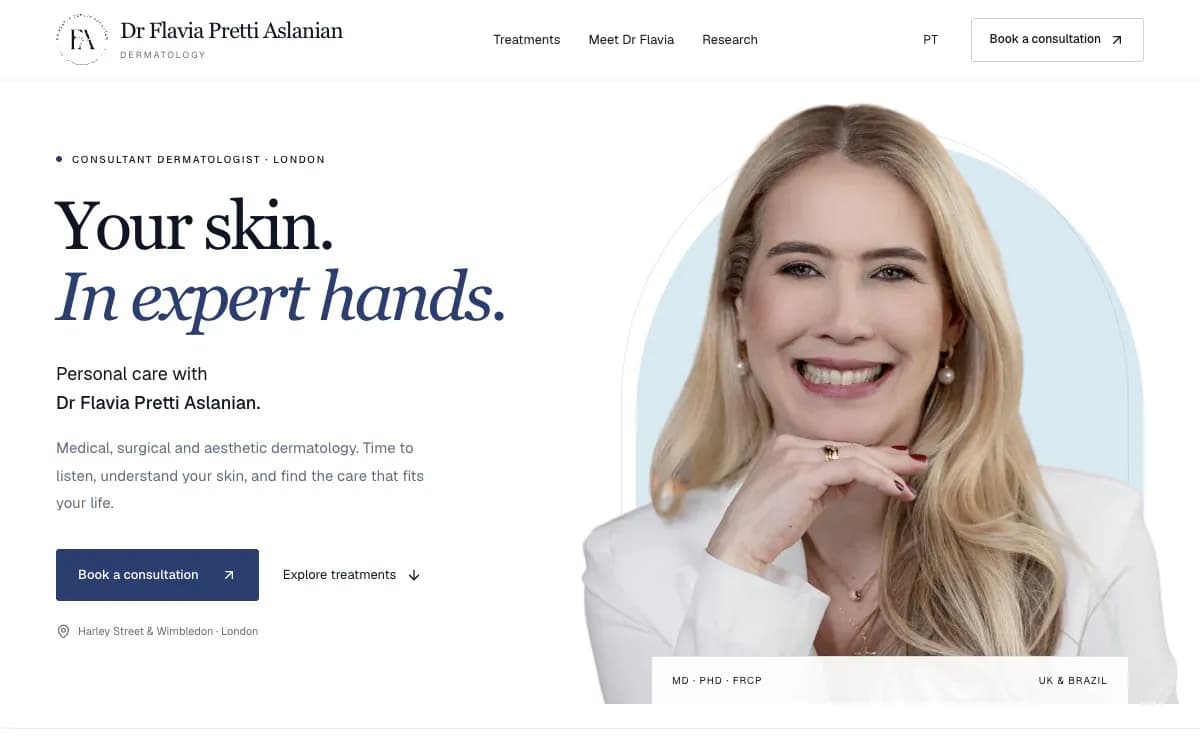
A new landing page guides patients to medical, aesthetic and surgical care. The practice edits its own content, and staff have a password-protected dictation tool in the same app.
- Next.js
- Sanity CMS
- Tailwind v4
- Radix
- Motion
- ISR
- Railway
- Cloudflare
Design · Build · Deploy
- 84 published English and Portuguese routes
- 72 treatment pages with clinic-editable content
- Custom before/after comparison UI
- Internal clinician dictation tool
- 02
 2026
2026Continuum
Web3 · DeFi protocol
A Solana DeFi protocol for 24/7 synthetic exposure to real-world assets
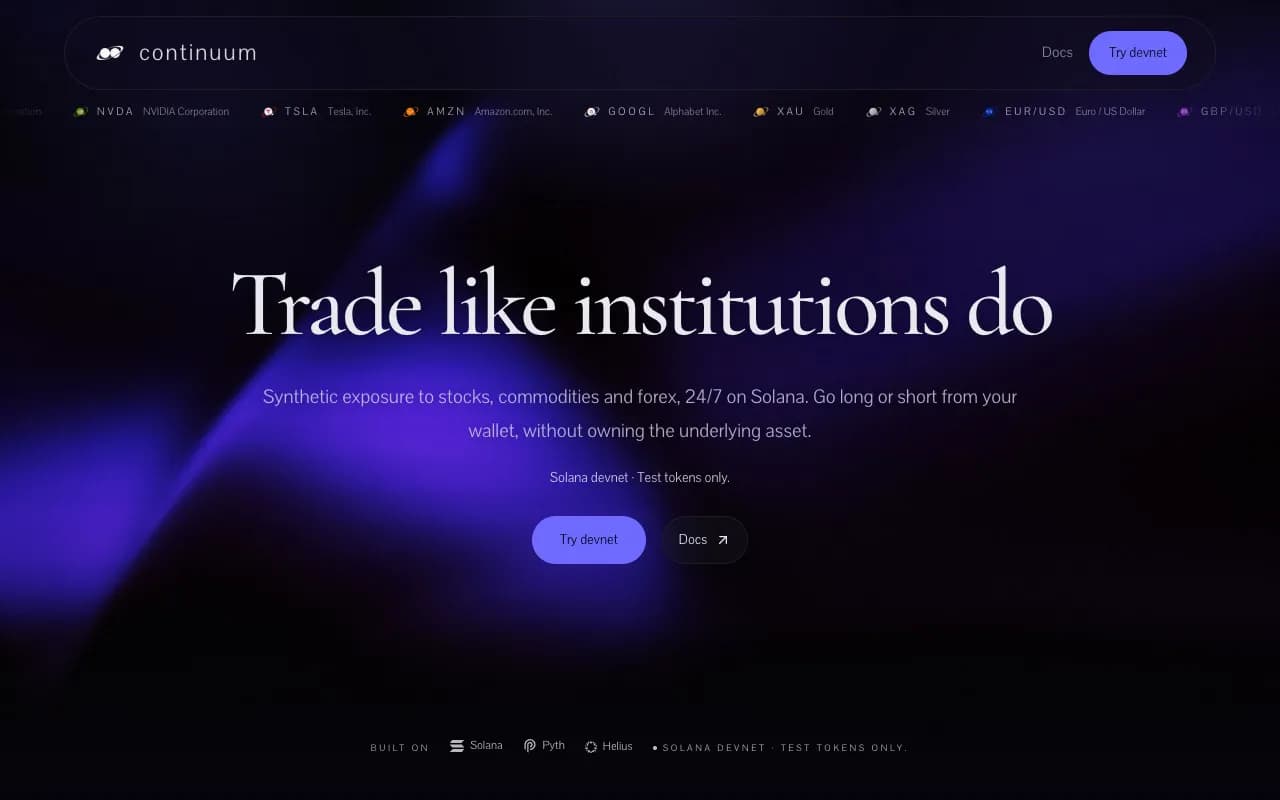
Deposit USDC, mint matched long and short tokens at NAV, sell the leg you don't want. A constant-product invariant keeps the pair redeemable back to the deposit.
- Rust
- Anchor
- Solana
- TypeScript
- Pyth
- Next.js
- Bun
- Railway
Pre-mainnet. Devnet markets, audits pending.
Protocol · Frontend · Infra
- 5 Solana smart contracts in Rust
- 8 synthetic markets on devnet
- 4-state oracle risk machine
- Volatility-scaled fee curve
See 4 more projects
- 03
 2025 →
Delta Xi
E-commerce · Brand
A mathematics apparel brand on a storefront I wrote from scratch
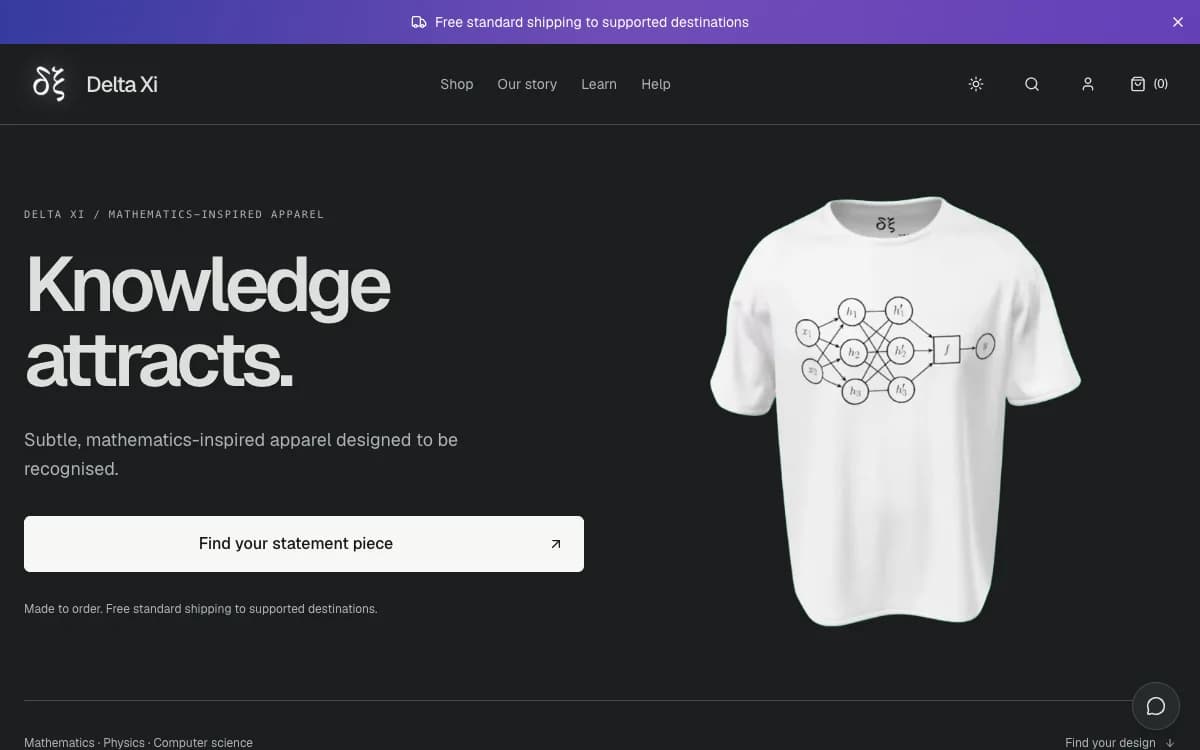
I built the cart, checkout, product recommendations, affiliate programme and support desk, and run the infrastructure myself.
- Next.js
- React Server Components
- Stripe
- Auth.js
- Tailwind
- Umami
- Chatwoot
- Cloudflare
Founder · Engineer · Operator
- Custom checkout on Stripe + Klarna
- Server-rendered recommendation engine
- Self-hosted analytics and live chat
- 50+ STEM explainers driving organic search
- 042026
Dray
AI tools · Product website
A product website for keeping project context across AI agents
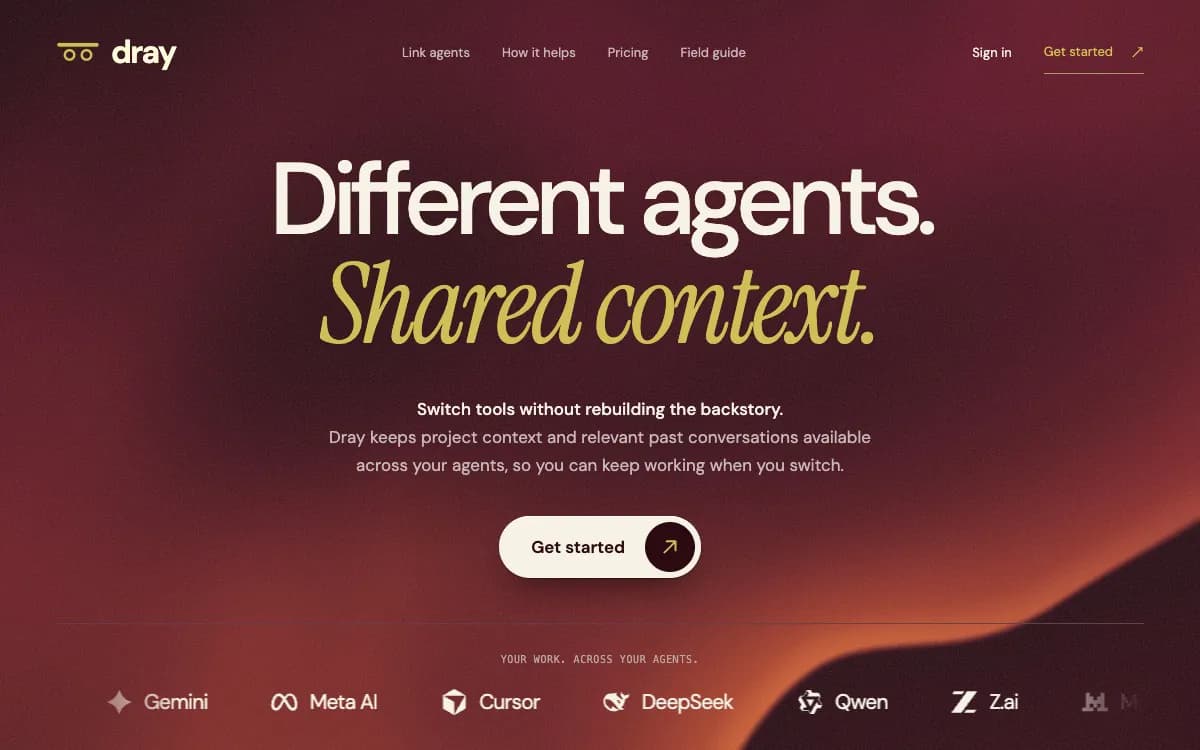
An editorial landing page introduces shared project context, shows illustrative agent workflows and explains setup and privacy ahead of beta.
Beta coming soon. The public demos illustrate the workflow; they are not live agent connections.
Design · Build
- Interactive agent-linking illustration
- Project-context walkthrough
- Setup and privacy guidance
- 05
 2026
2026Tallylamp
Open source · Browser infrastructure
A browser for AI agents that you can watch and take over
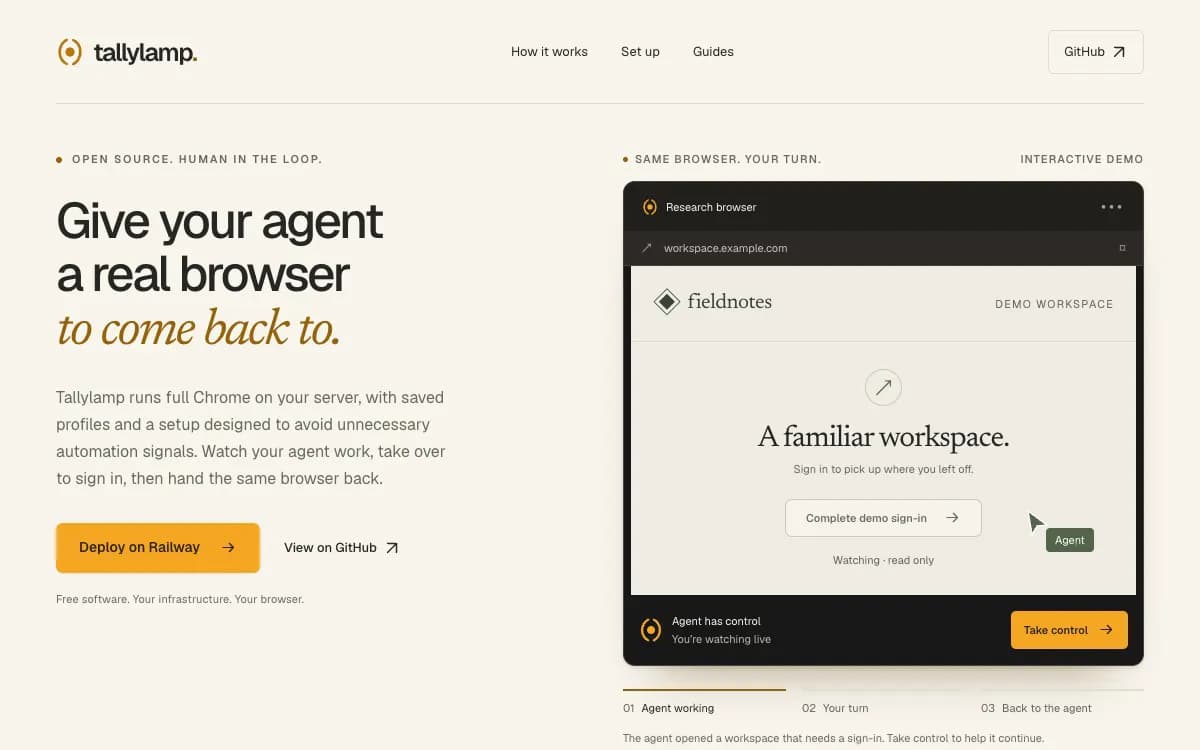
I built the browser service, dashboard, MCP server and public website. Agents use Chrome on your server while you watch the same browser live. Take control to sign in, then hand it back; saved profiles carry between sessions.
- TypeScript
- Next.js
- Chrome
- MCP
- SQLite
- Docker
- Railway
Public site at tallylamp.dev. The browser service and dashboard are self-hosted.
Creator · Engineer · Maintainer
- Live viewing and explicit human handoff
- Separate agent permissions and reusable profiles
- MIT licensed, with a Railway deploy template
- 06
 2025 →
CarClout
SaaS · AI content engine
A subscription app that turns a phone photo of a car into something worth posting
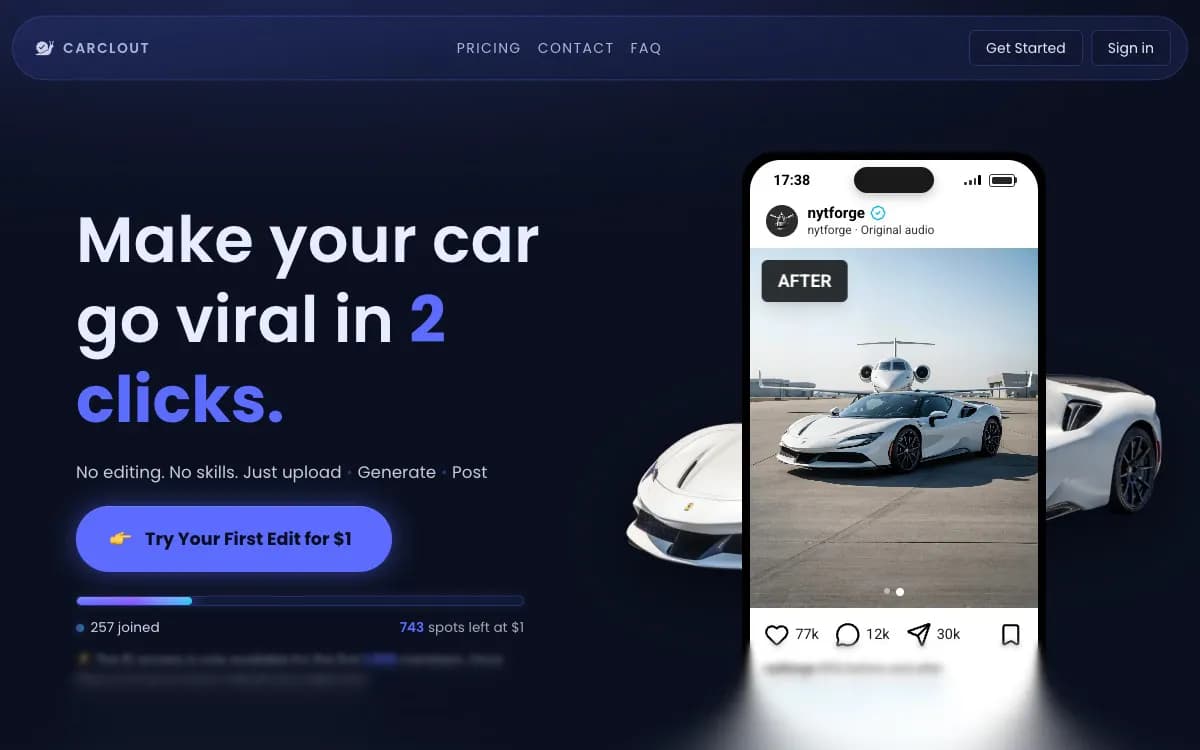
Upload a photo, pick a template, get the edit back a moment later. Thirteen AI models sit behind a metered credit ledger, next to a layer editor, a post scheduler and a live chat room.
- Next.js
- SurrealDB
- Auth.js
- Stripe
- fal.ai
- Cloudflare R2
- Stream.io
- Railway
Engineering · Infra · SEO
- 724 generated landing pages, all live
- 128 API routes behind one app
- 13 AI models on a metered credit ledger
- Instagram posting, scheduling and analytics
One runs on the client's own domain and one is internal to theirs, so there is nothing here of mine to show you.
- ClientJooyontechAI sales assistant, Korean and English
- ClientPHFWeb, AI and automation · private medical practices, UK
Not everything is public. A fair amount of the work sits in private repositories I cannot hand you a link to. Ask, and I will walk you through it.
Ask to see moreHow a project runs
- 01Before code
Scope
One call, then a written spec. What it does, what it deliberately does not do, and what milestone one is. You sign that off before I write a line.
- 02Early
First deploy
A narrow slice that actually works, running where it belongs. A URL you can open, a build on your phone, a job on your own servers. Real data, real hosting, no placeholder screens.
- 03Ongoing
Build in the open
Deploys land as the thing fills in, not in one drop at the end. You watch it happen. And you get to change your mind while changing it is still cheap.
- 04Handover
Yours to run
The product runs in your accounts, with the domain, hosting and documentation under your control. Source-code transfer is quoted separately; we agree what is included during scoping.

Rafael Aslanian
I got my hands on a computer at 6 and never really stopped.
Now it is decentralised finance, tokenising real-world assets and topological deep learning, then building whatever those turn into. Continuum came out of that. So did Delta Xi (δξ, an infinitesimal change in a random variable).
Bossa nova and MPB were always on at home, so I sang before I played anything. Guitar and piano came later, then jazz.
- Based
- London, UK
- Languages
- English, Portuguese; intermediate Spanish and Chinese
- Focus
- Web3, DeFi, real-world asset tokenisation
- Also
- Music
Have an idea? Tell me.
Need the audience too?
I can build the thing. Getting people to notice it is a separate job, and not mine. For that I work with Nytforge, who film, edit and put the work in front of a local audience. They are strongest with automotive and local businesses.